
Fuel is usually the single largest cost of running a power plant — so the choice between gas, diesel and heavy fuel oil is less a technical detail than the decision that defines the whole project.
There is no universally "best" fuel. Each of the three suits a different combination of duty, scale, site and supply, and the right answer for a remote mine is the wrong answer for a standby set at a factory. The good news is that the decision follows a clear logic once you look past the engines to what actually reaches your site and how the plant will run.
The lowest emissions — and low cost where you can get it
Gas-fuelled generation — on natural gas, associated gas or LPG — offers the lowest emissions of the three and a low running cost, which makes it the natural choice for continuous, prime-power duty. Where a gas supply exists it is hard to beat: much less CO₂, far less particulate matter, and a fuel that is usually cheaper per kWh than diesel. (Heavy fuel oil can undercut it on fuel cost alone at large scale — see below — but only with far higher emissions and complexity.)
The catch is in the supply. Gas needs an actual source — a pipeline connection, a wellhead, or associated gas from oil production — and that gas has to be of suitable, consistent quality, sometimes requiring conditioning before it reaches the engine. Where gas flow is variable, a dual-fuel configuration (gas with diesel backup) keeps the plant running when supply dips. Gas comes into its own for industrial sites near a pipeline and for oilfields that can turn otherwise-flared associated gas into on-site power.
The dependable, deploy-anywhere option
Diesel is the workhorse. It starts fast, responds quickly to load changes, needs no gas connection, and delivers high power density from a compact package — which is why it dominates standby, backup and peaking duty, and why it is the default for remote sites that have no other fuel infrastructure. A containerized diesel set can be trucked in and running the same day.
Its weaknesses are cost and emissions: diesel is generally the most expensive of the three per kWh, its price is volatile, and at a remote site the fuel has to be trucked in over long distances. It is excellent where reliability and fast deployment matter more than fuel economy — and perfectly viable for prime power at smaller scales.
The lowest cost per kWh — at scale
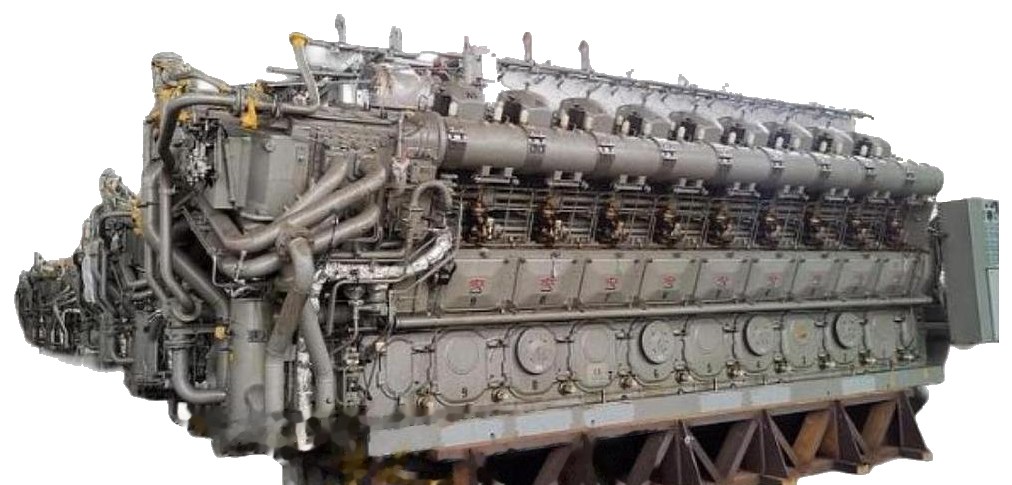
Heavy fuel oil (residual fuel) burned in medium-speed engines can deliver the lowest cost per kWh of any option, which makes it the choice for large, continuous baseload plants — utility-scale generation and industrial parks in the multi-megawatt range. Where heavy fuel is economically available, the fuel savings on a plant running around the clock are substantial.
That economy comes with complexity. HFO is viscous and must be heated, purified and treated before it can be burned, which means fuel-handling systems, separators and more maintenance than diesel or gas. It only makes economic sense at scale and on continuous duty, and it carries higher emissions that must be managed. HFO is a plant decision, not a plug-and-play one.
Side by side
| Gas | Diesel | HFO | |
|---|---|---|---|
| Fuel cost per kWh | Low | High | Lowest (at scale) |
| Emissions | Lowest | Higher | Highest — needs management |
| Start & load response | Moderate | Fast | Slow |
| Best duty | Continuous / prime | Standby, peaking, prime | Continuous baseload |
| Typical scale | 0.5–1 MW containerized & up | ~1–2 MW containerized & up | 5–50+ MW |
| Key requirement | A gas supply | Fuel delivery to site | Fuel treatment & scale |
| Deployment speed | Fast (containerized) | Fastest | Longer (built-up plant) |
Indicative comparison — the right choice always depends on your specific site, duty and fuel supply.
A simple decision framework
Four questions usually settle it:
- What can you get to site? A pipeline or wellhead points to gas; no gas infrastructure points to diesel or HFO. Fuel logistics decide more projects than engineering does.
- How will the plant run? Occasional backup favours diesel; running around the clock favours gas or HFO, where fuel economy repays the higher complexity.
- At what scale? HFO's economics only appear in the multi-megawatt, continuous range; below that, gas or diesel fit better.
- Cost vs. emissions vs. speed? Diesel wins on deployment speed, gas on emissions (and beats diesel on running cost), HFO on fuel cost per kWh at scale.
Not either/or
Fuel choice is not always a single answer. Dual-fuel engines run on gas with diesel backup for sites with variable gas; a phased project may start on diesel for speed and add gas or HFO capacity as infrastructure matures. The format matters too — the same fuel can be delivered as a containerized unit or a built-up plant.
Where Istmica fits
Because we are brand-independent, we are not steering you toward a single fuel or a single manufacturer's engine. We start from your site, your duty and your fuel supply, then specify across all three fuels and the whole supplier market — containerized gas and diesel sets in the sub-megawatt to low-megawatt range, and HFO or gas plants from 5 to 50+ MW. The goal is simply the lowest total cost of reliable power for your operation, which is exactly what an honest fuel comparison is meant to find.
Not sure which fuel fits your site?
Tell us your load, duty and what fuel you can get to site — our engineers will recommend the fuel and configuration that deliver the lowest cost of reliable power, with a USD proposal.
Request a Power Assessment →